The Generous Table: Why Passing Platters Beats Plating Up at Your UK Celebration
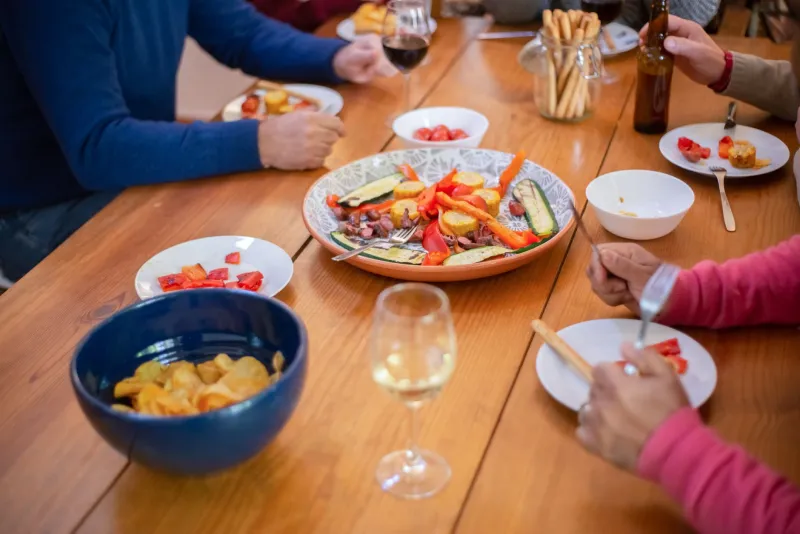
There is a particular sound that tells you a party is going well: the clink of serving spoons, a chair shifted to make room for a platter, and someone saying, 'Just pass it down.' It is not the sound of a restaurant. It is the sound of a table that feels alive. For UK hosts planning a celebration in 2026, family-style service - generous dishes placed in the middle and passed from hand to hand - is one of the warmest ways to feed a room. It is less formal than plated service, less queue-based than a buffet, and it gives guests something precious: permission to help themselves and look after each other.
The case for a table that feels like home
Plated service can be beautiful. A buffet can be practical. But family-style service does something different: it turns catering into hospitality. When a platter of roast chicken or a bowl of buttery new potatoes is set down between guests, conversation changes. Someone offers the last Yorkshire pudding to the person opposite. Someone else asks whether the gravy is gluten-free. A cousin passes the bread. The meal becomes a shared activity rather than a performance.
At Food Love Catering, we think this matters especially for UK celebrations because so many of our happiest food memories are already communal. Sunday lunch is not a plate handed to you in silence; it is a table crowded with dishes. A village hall supper, a pub garden lunch, a kitchen table birthday - these are the meals people remember. Family-style catering borrows that warmth and scales it up.
Setting the scene: layouts that invite passing
Family-style works best when the table itself is set up for generosity. Long trestle tables are ideal, but round tables can work beautifully too. The key is to leave enough room between guests and platters. As a rule, avoid narrow tables that leave no space for serving dishes, and do not put every platter at the head of the table where only a few people can reach them. Spread dishes down the centre instead, so each section has its own bread, its own jug of water, its own bowl of greens.
For larger parties, think in zones. A long table might have two or three clusters of platters, each serving eight to ten guests. For a marquee or village hall, use round tables of eight with a small cluster of dishes in the middle and a side table for drinks. Leave a clear route for helpers to move between tables. If guests have mobility needs, make sure they can reach a platter without stretching or asking repeatedly, and consider serving them first.
Portion planning without panic
Generous does not have to mean wasteful. Family-style service can actually be easier to plan than plated service because guests take what they want. For a main course, aim for around 150-200g of cooked protein per guest, plus two or three substantial sides. If you are serving three courses, lean towards the lower end. For 40 guests, that might mean four platters of protein, six platters of vegetables or grains, two baskets of bread, and plenty of gravy or sauce in jugs.
Plan for about 1.25 portions per person rather than a precise one-to-one. That gives you a little cushion without a mountain of leftovers. Dessert is often the course where family-style shines: a trifle bowl, a board of brownies, a plate of shortbread and a jug of cream can all be passed around with ease. Cheese works well too, especially if you add oatcakes, chutney and grapes. Just remember that the table needs space for glasses, cutlery and elbows as well as food.
Dietary swaps that do not feel like an afterthought
One of the kindest things you can do as a host is make dietary options feel like part of the feast rather than a separate plate kept in the kitchen. Label dishes clearly and use separate serving spoons. If you are serving a roast, offer a vegan centrepiece that is genuinely delicious - a mushroom and chestnut wellington, for example, or a slow-baked aubergine with tomato and herbs. Keep gluten-free gravy in a labelled jug. Put dairy-free dessert on the table alongside the others, not in a corner.
Family-style service makes this easier because guests can see what is available and choose for themselves. It also removes the awkwardness of a guest having to ask what is in every dish. A simple card or label is enough. If you are catering for a mixed group, plan two or three dishes that are naturally free from common allergens rather than trying to adapt every single recipe.
Keeping winter food warm and the room cosy
A UK party in November or December has one obvious enemy: heat loss. Hot food can go cold quickly, especially in a marquee, hall or conservatory. The solution is not to rush the meal but to serve it in waves. Put out the hot main dishes first, then bring the sides as guests begin to eat. Keep spare platters in a low oven and use lidded serving dishes where possible. Preheat plates if you can, and keep the room warm before guests sit down.
If you are using a village hall or marquee, ask about heating in advance and avoid propping doors open. Insulated cool boxes are not just for summer; they can keep hot dishes warm while you finish the gravy. And try not to let speeches run long just before the hot food is due. A short welcome is lovely. A twenty-minute speech while the lamb cools is less so.
Menu ideas that encourage lingering
Family-style menus should be robust enough to sit on the table without collapsing. Slow-roasted shoulder of lamb with rosemary and garlic, lemon and tarragon roast chicken, salmon en croute, and a well-made vegetarian wellington all work beautifully. For sides, think buttered new potatoes, roasted carrots with honey, red cabbage, greens with toasted almonds, and a big dish of Yorkshire puddings if the mood is right. Bread, olives and a jug of gravy do more for a table than any fiddly garnish.
For dessert, a chocolate and orange trifle, a warm sticky toffee pudding, or a platter of brownies with berries will keep people at the table. Coffee and tea afterwards give guests a reason to linger. The goal is not a perfect restaurant plate. The goal is a table where people feel comfortable reaching across, topping up their own glass and staying for one more conversation.
When family-style is not the answer
We are not saying every event should be family-style. If the venue has strict service rules, if the guest list is very formal, or if the space is too tight for platters, plated service may be the better choice. Some guests also prefer the ease of being served, especially at a wedding where they have already navigated a long day. The point is to choose the style that fits the room and the people, not to follow a rule.
The final helping
For us, family-style catering is the warmest way to feed a UK party because it trusts guests with the good things. It says: there is plenty, help yourself, pass it on. In 2026, when so many celebrations are a mix of old traditions and new ideas, that simple act of sharing a table still feels quietly radical. Hand someone the bread. Offer the last slice. Let the table do the rest.